

Thinking of using a creative marketing agency?
If you’ve ever considered working with a creative marketing agency, do you know what to expect and how do you get the best out of them?
We spoke to Andrew Griffiths – Orchard’s Head of Creative – to understand the creative process and why the relationship between client and agency is a partnership worth investing in.
Q: How do you approach a brief?
Sometimes a client arrives with one already written. When that happens, we pull it apart to check for gaps and work out whether there’s more interrogation needed before we develop a proposal. Other times we give clients our own briefing document to fill in, either independently or with us in a workshop. That process is revealing, because what someone writes down and what’s actually in their head are often two different things. The back and forth is where you find the real brief.
I think of the brief as the foundations. The creative output is the destination. And just as you can’t build anything solid on unstable ground, you can’t build a great campaign on a vague brief. A vague brief is a licence for a vague output, and that’s when creativity fails to deliver for anyone.
Our process runs through five stages: Brief, Discover, Develop, Deliver, and Distil. It’s not just a project management framework. It’s a way of thinking that reduces risk and increases pace. We align on objectives, audience, and success measures before we generate a single idea.
In the creative team we also push hard on what a brand can’t or won’t say. Constraints used honestly are creative tools. They stop work becoming generic and force the thinking into territory that’s genuinely ownable.
Examples of our creative work for Longleat Safari Park:
Q: What process do you use to generate ideas and creative output?
There’s no formula, but there is a discipline. Every challenge we’re set is unique and needs its own way of thinking. But we always start the same way: in the Discover phase, aligning on the objective, understanding the audience in depth, and agreeing what success looks like before any creative development begins. That north star, that clear shared view of what we’re trying to achieve, is what separates ideas that are interesting from ideas that are effective.
In the Develop phase we explore widely before we narrow. I’m wary of teams that fall in love with the first idea that feels right. The first ideas are usually the most obvious ones.
You have to turn over a few rocks before you find the gold. Sometimes the obvious answer is the right one, but you have to earn that conclusion rather than assume it.
The Distil stage completes the loop. Rather than treating each project as a one-off, we treat it as part of an evolution. We measure, learn, and bring those findings into the next brief. Every campaign we run, we’re looking to add that extra bit of quality each time. You never want to go backwards.
Q: How do you tailor your creative approach to different sectors or clients?
The principles stay the same. The translation changes. What moves someone making a decision about a financial product is very different from what resonates with someone booking a holiday, engaging with a heritage brand, or responding to a public health message. You have to understand the world the audience lives in, not just the category you’re working in.
A behaviour change campaign for Transport for Wales and a brand engagement program for Principality Building Society both require the same commitment to insight, strategy, and craft. The content and the culture differ. The process doesn’t.
Q: How do you demonstrate the ROI or impact of creative work?
This is one of the industry’s genuinely hard problems, and we should be honest about that. Attribution is messy. The relationship between a piece of creative work and a commercial outcome involves too many variables to be perfectly defined.
But there are meaningful things we can measure: awareness shifts, brand tracking, audience sentiment, engagement depth, and commercial performance over time. With digital campaigns the picture is clearer still: media performance, reach, press coverage generated, social audience growth, event or product sales. The data is there if you know what you’re looking for.
The mistake is demanding exact causality where it can’t exist. The smarter question is: is the brand in a stronger position than it was? Is the audience more likely to choose you than they were before?
We build measurement into briefs from the start through our Distil stage, not as an afterthought. That way, impact isn’t something we try to prove retrospectively. It’s something we designed for. Framing work around outcomes, not outputs, is a discipline.
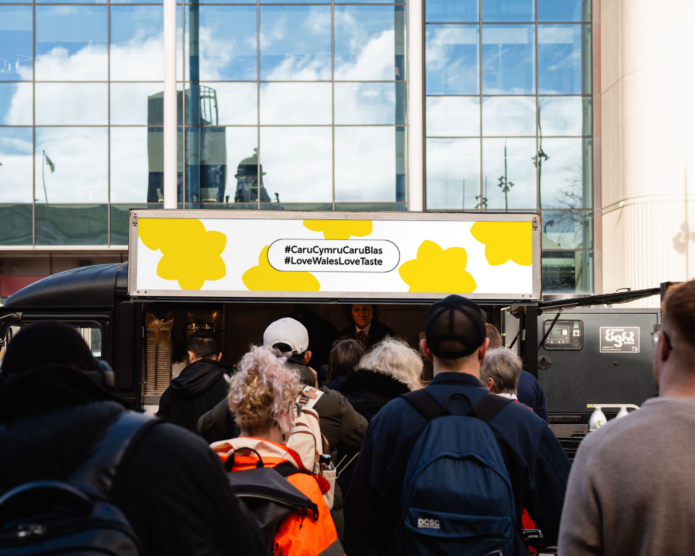
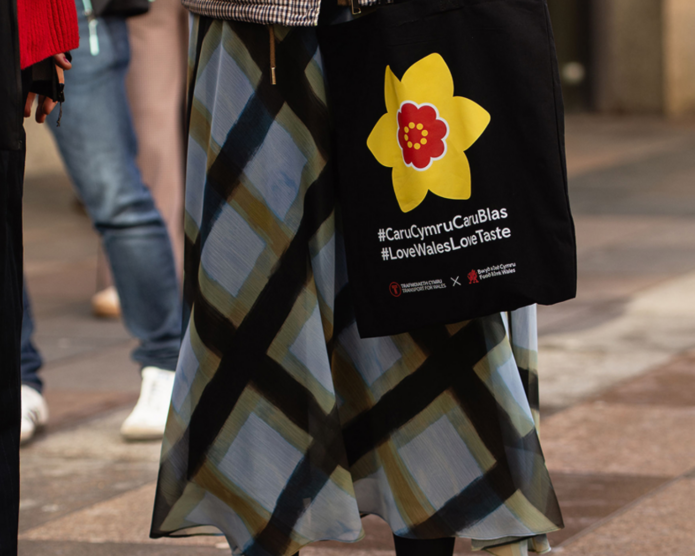
Examples of our Creative work for Wales Food & Drink:
Q: What makes Orchard’s creative work different from others?
We balance strategy and craft in the same conversation. That’s a structural choice, not a happy accident. Media, creative, content, and digital are built to work together at
Orchard, not managed as separate disciplines that hand work between them. The thinking and the making happen together, and that integration produces sharper work because everyone executing the idea understood it from the start.
We became employee-owned in 2024, and that formalised something clients already experienced: teams that take genuine ownership, stay close to the detail, and care about outcomes beyond the launch. The long-term partnership mindset that comes with that is something you feel in the room, not just in the contract.
We’re small enough to care, but big enough to deliver. That balance matters. Clients get the senior attention and personal investment of a smaller creative marketing agency, with the breadth of capability and experience of a much larger one.